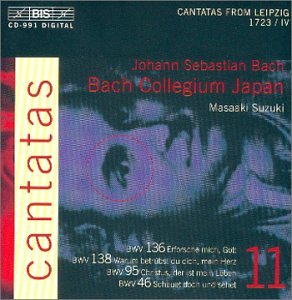

Bach: Cantatas, Vol 11 (BWV 136, 138, 95, 46) /Bach Collegium Japan · Suzuki
R 959
or 4 x payments of R239.75 with
Availability: Currently in Stock
Delivery: 10-20 working days
Please be aware orders placed now will not arrive in time for Christmas, please check delivery times.
Bach: Cantatas, Vol 11 (BWV 136, 138, 95, 46) /Bach Collegium Japan · Suzuki
The four cantatas on this release--volume 11 in the Bach Collegium Japan's survey of Bach's sacred music--aren't well known, even among Bach lovers. But fans probably will recognize some of the music: for example, Bach subsequently adapted the rollicking opening chorus of BWV 136, Erforsche mich, Gott, for the finale of his "Lutheran" Mass in A; the melancholy title chorus of BWV 46, Schauet doch und sehet ("Behold and see"), became "Qui tollis peccata mundi" in the Mass in B Minor. Surprises of recognition like these are always enjoyable, of course, but there are plenty of unfamiliar delights on this disc, too. For instance, there's an unusual format: two works, BWV 138 and BWV 95, lack the elaborate chorus that typically begins a Bach cantata; they consist mostly of passages of recitative (arioso, really) intercut with lines of a chorale melody in a sort of dialogue. A number of other nice surprises involve Bach's ingenious use of instruments. For example, that jolly chorus in BWV 136 features a bravura part for corno da tirarsi (slide horn), an instrument that BCJ brass expert Toshio Shimada reconstructed himself for this recording. The arioso-chorale "dialogue" in BWV 138 has a pair of oboes twisting their notes around the singers' parts like decorative vines; in BWV 195 those oboes join the tenor in a graceful aria as pizzicato strings flutter softly around them. BWV 46 has two recorders swirling through the disconsolate opening chorus; later on, there's an alto aria without strings or continuo--it calls for only those two recorders, with the oboes playing a "walking" bass line in unison. (By the way, countertenor Kai Wessel sounds notably more confident and less hoot-y there than in the alto aria of BWV 136.) Finally, more bravos go to Peter Kooy, who tosses off two coloratura bass arias with confidence and gusto. --Matthew Westphal