
BUYOHLIC
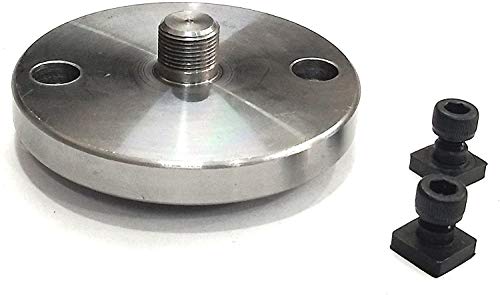
65 mm Back Plate for mounting 50 mm Chucks on Rotary Tables ((Size-14 x 1))
Free shipping with 3 or more products in your cart
Payflex: Pay in 4 interest-free payments of R212.00. Read the FAQ
R 848
In stock
Low stock in USA warehouse Order soon to secure your order
Duties, insurance and VAT included
Delivered in 10–20 working days —



Free shipping with 3 or more products in your cart
Secure checkout
Your payment is fully protected
Duties & VAT included
No surprise charges at the door
Tracked delivery
Track your order end to end
Returns support
30-day return window
Description
- Use of product- Back plates serve as mounting surfaces for workpieces or fixtures. They facilitate the secure attachment of the workpiece or fixture to the rotary table, enabling precise machining operations such as milling, drilling, or grinding. Additionally, back plates may incorporate features such as T-slots or mounting holes to accommodate different types of workpieces and tooling setups, enhancing versatility and accuracy in machining processes.
- Robust Construction: Engineered from sturdy tool steel, our back plate is built to withstand heavy-duty machining operations, providing stable support for your workpieces.
- Precision Machining: Designed with meticulous attention to detail, our back plate offers precise alignment and compatibility with your rotary table, ensuring accurate machining results.
- Universal Compatibility: Compatible with a wide range of rotary tables, our back plate is a versatile addition to your workshop, catering to various machining projects.
- Easy Installation: Installing our back plate is quick and straightforward, allowing you to attach it to your rotary table effortlessly for immediate use.
- Secure Mounting: Equipped with sturdy mounting holes, our back plate ensures a secure and stable connection to your rotary table, minimizing vibrations during machining.
- Smooth Surface Finish: Finished with a smooth surface, our back plate provides an ideal mounting surface for your workpieces, reducing friction and enhancing machining precision.
- Package Includes: 1 x Precision Back Plate for Rotary Table 3 x Tee Nuts Bolts
- Purpose: The chuck for a rotary table typically has jaws or clamps that can be adjusted to securely grip the workpiece. It ensures that the workpiece remains stable and properly aligned during the machining process, allowing for accurate and consistent results. This is especially important for tasks that require precise positioning or multiple machining operations on different sides of the workpiece.
Technical Specifications
Manufacturer
Buyohlic
Model
86868
Color
Silver
Size
(Size-14 x 1)
Weight
0.35 kg
Shipping & Delivery
Your order is shipped from the USA and delivered to your door in South Africa in 10–20 working days. All items are fully tracked.
Returns & Exchanges
We offer a 30-day return window. If something isn't right, contact our support team and we'll make it right.


