

I rabbit Kutani pottery teapot pot (with tea strainer)
Product Description
I rabbit Kutani pottery teapot pot (with tea strainer)
- Traditional Japanese Kutani Style Beautiful Japanese Kutani style ceramic teapot featuring an elegant rabbit motif symbolizing luck and prosperity in Japanese culture. The detailed hand-painted design brings authentic Japanese aesthetics to your tea table.
- Built-In Tea Strainer for Loose Leaf Tea Includes a convenient tea strainer that allows you to brew loose leaf tea easily. Perfect for green tea, sencha, genmaicha, oolong, and other traditional teas while keeping leaves separated for a smooth pour.
- High-Quality Ceramic Craftsmanship Made from durable ceramic with a comfortable handle and smooth pouring spout. The teapot retains heat well, helping tea develop full flavor while maintaining the traditional look of Japanese pottery.
- Perfect Size for Daily Tea Enjoyment Holds approximately 350 ml (about 12 oz), an ideal size for preparing 2–3 cups of tea. Great for personal tea time, sharing with friends, or enjoying a relaxing Japanese tea experience at home.
- Elegant Japanese Gift Idea A charming gift for tea lovers, collectors of Japanese pottery, or anyone who appreciates traditional craftsmanship. Ideal for birthdays, holidays, housewarmings, or Japanese culture enthusiasts.
Japan KUTANI
A stone monument bearing the inscription "Ko-Kutani kiln ruins" stands quietly in a clearing.
It marks the spot where the Daishouji Clan(a branch of the Kaga Clan)
established a kiln in about 1655,to make use of the local porcelain stone.
Tha porcelain ware that was created there was later called "Ko-kutani"
and became the foundation for Japanese colored porcelain ware.
Rich overglaze colors applied with fluid brushwork -green,yellow,red,purple and blue-
give Kutani porcelain its characteristic beauty.
However,only half a century later the kiln was abandoned for reasons that nobody knows.
About 100 years later,Kutani porcelain was revived under the patronage of the Kaga clan.
The Kasugayama and Wakasugi kilns were established, and kilns such as the Yoshidaya kiln
rode on the momentum of "revived Kutani",all producing overglaze porcelain ware.
Various styles competed and combined to develop into the overglaze techniques
that have been handed down to this day.
In modern times,the gorgeous Kinrande style(very high-quality design of gold)
has become well known in the West as "Japan Kutani"
Kutani porcelain, which combined the artistry of Ko-Kutani ware and the utilitarian
beauty that developed from "revived Kutani",continues to evolve.
Technical Specifications
You might also like
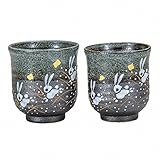
Jpanese traditional ceramic Kutani ware. Set of 2 yunomi Teacups. Jumping rabbit. With paper box. ktn-K5-0650

Japanese Matcha Bowl Rabbit KUTANI YAKI(ware) (Standard version)

Kutani Ware K4-682 Jumping Rabbit Pair Japanese Teacups Yunomi Brown Color

Kutani Yaki(ware) Japanese Yunomi Tea Cup Rabbit

Kutani pottery teapot pot mountain range (with tea strainer)

Tea Forte Pugg Ceramic Teapot Infuser Set with Loose Lea Tea Steeping Basket and Lid, Cherry Blossoms

Pair Tea Cups Rabbit Kutani Yaki Yunomi