
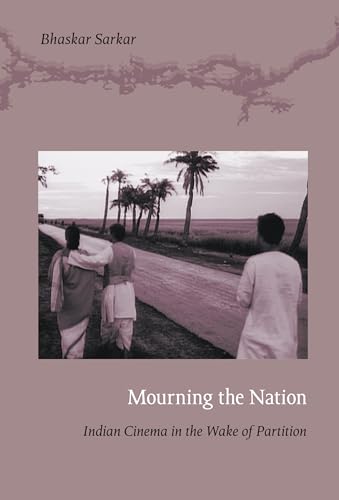
Mourning the Nation: Indian Cinema in the Wake of Partition



Description
- Used Book in Good Condition
Sarkar tracks the initial reticence to engage with the trauma of 1947 and the subsequent emergence of a strong Partition discourse, revealing both the silence and the eventual “return of the repressed†as strands of one complex process. Connecting the relative silence of the early decades after Partition to a project of postcolonial nation-building and to trauma’s disjunctive temporal structure, Sarkar develops an allegorical reading of the silence as a form of mourning. He relates the proliferation of explicit Partition narratives in films made since the mid-1980s to disillusionment with post-independence achievements, and he discusses how current cinematic memorializations of 1947 are influenced by economic liberalization and the rise of a Hindu-chauvinist nationalism. Traversing Hindi and Bengali commercial cinema, art cinema, and television, Sarkar provides a history of Indian cinema that interrogates the national (a central category organizing cinema studies) and participates in a wider process of mourning the modernist promises of the nation form.
Technical Specifications
Shipping & Delivery
Your order is shipped from the USA and delivered to your door in South Africa in 10–20 working days. All items are fully tracked.
Returns & Exchanges
We offer a 30-day return window. If something isn't right, contact our support team and we'll make it right.