
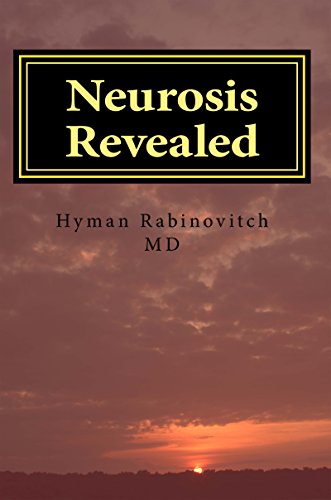
Neurosis Revealed: The illness we all have but know little or nothing about. A Layperson's Guide.
Description
Neurosis refers to a mental illness which affects everyone to a greater or lesser extent, yet very little, if anything, is known about it. In contrast, the other mental illness, psychosis, although well known and usually thought of at the mention of the words "mental illness" is quite rare. The two are entirely different in incidence, cause, signs and symptoms, treatment and prevention. This book is written in lay language to reveal the mystery of neurosis and clearly distinguish it from psychosis, the lay term for which is "crazy". Unfortunately, through ignorance the term crazy may be applied to those suffering from neurosis, with serious consequences.
A plea is made for the abandonment of the unwarranted stigma (shame) associated with both illnesses.
Neurosis is caused by psychic trauma in the past which is stored in the subconscious where it has a negative influence on the conscious in the present. Neurosis is the illness, psychic trauma its cause and Post-traumatic Stress Disorder (PTSD) its manifestation. PTSD is not the exclusive disorder of war veterans.
Knowledge of the signs and symptoms of an illness is crucial to its recognition (diagnosis) just as knowledge of its cause is to its prevention. Faulty parenting is the most common, but not the only, cause of neurosis. Sub-optimal parenting is universal through lack of appropriate training, education or experience. As everyone has or has had a parent or two the consequence of their sub-optimal parenting (neurosis) is ubiquitous.
The treatment of neurosis is talk therapy of which there are many forms available. A little known, but highly effective, talk therapy entitled Intensive Short-term Dynamic Psychotherapy (ISTDP) is described in detail along with an explanation of the reason for its effectiveness. Unfortunately, most individuals with neurosis today are treated with drug therapy (anti-depressants or tranquilizers for anxiety ). This treatment is effortless, lucrative, non-curative and may be accompanied by burdensome side effects. A significant beneficiary is the pharmaceutical industry.
There are causes of neurosis that are difficult (e.g. war) or impossible (e.g. death of a loved one) to avoid. There is a cause of neurosis, however, that although not avoidable, can certainly be reduced in effect. Considerable effort is expended to suggest improvement in parenting skills, the most common cause of neurosis, through "My Ten Commandments of Proper Parenting".
Suggestions of what to expect from the therapist chosen are offered with the warning to reconsider pleasant friendly sessions lasting years or even decades. Beneficial therapy should be one-on-one, face-to-face, dynamic and stressful, completed within one year and certainly within two years in the case of fragile or highly resistant patients.
Shipping & Delivery
Your order is shipped from the USA and delivered to your door in South Africa in 10–20 working days. All items are fully tracked.
Returns & Exchanges
We offer a 30-day return window. If something isn't right, contact our support team and we'll make it right.