
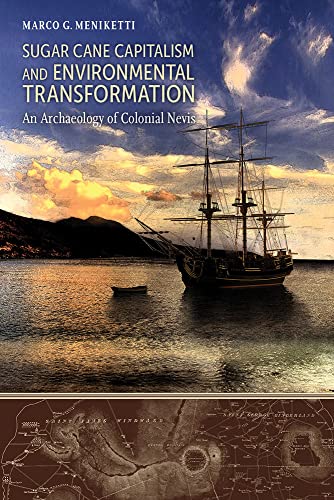
Sugar Cane Capitalism and Environmental Transformation: An Archaeology of Colonial Nevis, West Indies (Caribbean Archaeology and Ethnohistory)
Product Description
Sugar Cane Capitalism and Environmental Transformation: An Archaeology of Colonial Nevis, West Indies (Caribbean Archaeology and Ethnohistory)
Offers a rare exploration of the substantial environmental impact of capitalist sugar agriculture, colonial settlement, and the Atlantic slave trade on the Caribbean island of Nevis
In this deeply researched and multifaceted study, Marco G. Meniketti demonstrates how the landscape of the small Caribbean island of Nevis preserves and reveals artifacts and evidence of the highly complex and interrelated seventeenth- to nineteenth-century “Atlantic Economy,†comprising early capitalist sugar production, the African slave trade, and European settlement.
Â
Sugar Cane Capitalism and Environmental Transformation is based on twelve seasons of meticulous archaeological field work and documentary research. Although Nevis was once a bustling hub of the British colonial project, the emigration of emancipated slaves and abandonment by European planters left large swathes of Nevis vacant. Reclaimed by forests and undisturbed by later waves of economic development, the island—dotted with fascinating ruins, debris from the sugar industry, windmills, chimneys, and multistoried great house—provided Meniketti with an ideal subject for archaeological inquiry.
Through intensive archaeological and landscape surveys of multiple key plantation sites, Meniketti traces the development of Nevis from its initial European settlement in 1627 to its central role as a British mercantile hub and a laboratory and prototype of capitalist sugar cultivation. His nuanced analysis explains the backdrop of European political and economic rivalries, of which the colonial agro-industrial enterprises were the physical manifestations, and makes telling comparisons with Dutch and French archaeological sites. The work also compares and contrasts the adoption of capitalist modes of sugar production and socialization at wealthy and middling plantation sites.
Â
Supported with a wealth of photos, tables, and maps, Sugar Cane Capitalism and Environmental Transformation offers a vital case study of one island whose environment and archaeological record illuminates the complex webs of Atlantic history.
Technical Specifications
You might also like

Terrarium

Terrarium Studio Sessions

PARSITIC TERRARIUM WORLD: An Alien Ecosystem Coloring Book with Color Guide

By Megan George - Modern Terrarium Studio: Design + Build Custom Landscapes with Su (2015-07-11) [Paperback]

Trashy Terrariums: A cheeky adult coloring book of plants, junk, and upcycled fun!

WAVY STUDIO Handblown 7" Glass Terrarium with Opening for Air Flow & Cork Stopper Cloche Style Glass Dome Vivarium Display Case (Small)

WAVY STUDIO Handblown 12" Glass Terrarium with Opening for Air Flow & Cork Stopper Cloche Style Glass Dome Vivarium Display Case (Extra Large)

WAVY STUDIO Handblown 10" Glass Terrarium with Opening for Air Flow & Cork Stopper Cloche Style Glass Dome Vivarium Display Case (Large)