
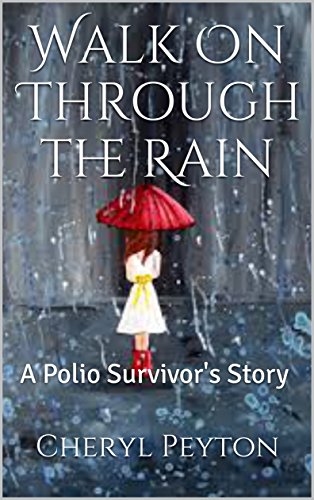
Walk On Through the Rain: A Polio Survivor's Story
Not Available / Digital Item
Walk On Through the Rain: A Polio Survivor's Story
In August of 1946 the Minnesota State Fair in Minneapolis was canceled for only the fourth time in its nearly hundred-year history. The previous cancellations had been due to wars: the Civil War and World War II. In 1946 the Fair was canceled for a different kind of war that was being waged against a deadly, but unseen, enemy: polio. Poliomyelitis had created a panic as it had spread across the United States crippling and even killing, mostly children, on an epidemic scale. The disease was all the more frightening as its method of transmission was unknown and there was no cure.
Minneapolis, in that summer, was experiencing a crisis level of new polio cases, prompting the Health Commissioner to cancel many public events; although there had been no decrease seen in the number of reported new cases.
To combat the unusually high number of polio cases in the area, four years earlier, a British nurse known as Sister Kenny had come from Australia and opened a clinic in the City, offering her unconventional methods, to treat the paralytic strain of the disease. Although she had demonstrated some break-through success in the Outback, her treatments remained controversial around the world.
Jeannie Erickson was 22 months old in July of 1946, and living in Minneapolis with her family, when she contracted the virulent strain of polio during an afternoon outing. Days later, when the symptoms first appeared, Jeannie was rushed to the hospital and became the youngest patient to be admitted to the Kenny Institute at Minneapolis General. First, put in an Iron Lung in Isolation when her life seemed threatened, she survived, only to face the probability of never being able to walk again.
This true-life novel is an accurate recording of this little girl's journey from her first stay in a children's ward, through multiple surgeries and treatments, as she battled to regain the full-use of her legs. Her story is both tragic and inspirational as she strove to overcome the devastating physical and emotional effects of her disease.