Books > Self Service > Special Features Stores > 34875086-8a6a-4dfe-b095-4d85fb30b3ba_0 > 34875086-8a6a-4dfe-b095-4d85fb30b3ba_1301 > New, Used & Rental Textbooks > Humanities > History > Asia
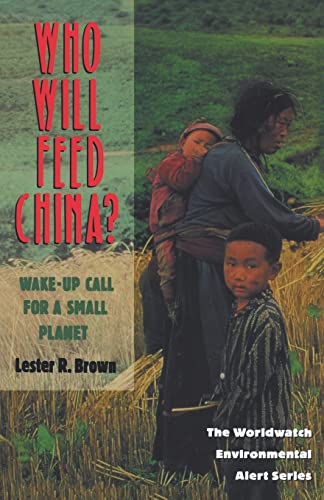
Who Will Feed China?: Wake-Up Call for a Small Planet (Worldwatch Environmental Alert)
Product ID: 10157174
Condition: New
Payflex: Pay in 4 interest-free payments of R181.25. Learn more
R 725
includes Duties & VAT
Delivery: 10-20 working days
Ships from USA warehouse.
Secure Transaction
VISA
Mastercard
payflex
ozow
Product Description
Who Will Feed China?: Wake-Up Call for a Small Planet (Worldwatch Environmental Alert)
In an integrated world economy, China’s rising food prices will become the world’s rising food prices. China’s land scarcity will become everyone’s land scarcity. And water scarcity in China will affect the entire world. China’s dependence on massive imports, like the collapse of the world’s fisheries, will be a wake-up call that we are colliding with the earth’s capacity to feed us. It could well lead us to redefine national security away from military preparedness and toward maintaining adequate food supplies.
To feed its 1.2 billion people, China may soon have to import so much grain that this action could trigger unprecedented rises in world food prices. In Who Will Feed China: Wake-up Call for a Small Planet, Lester Brown shows that even as water becomes more scarce in a land where 80 percent of the grain crop is irrigated, as per-acre yield gains are erased by the loss of cropland to industrialization, and as food production stagnates, China still increases its population by the equivalent of a new Beijing each year. When Japan, a nation of just 125 million, began to import food, world grain markets rejoiced. But when China, a market ten times bigger, starts importing, there may not be enough grain in the world to meet that need - and food prices will rise steeply for everyone. Analysts foresaw that the recent four-year doubling of income for China's 1.2 billion consumers would increase food demand, especially for meat, eggs, and beer. But these analysts assumed that food production would rise to meet those demands. Brown shows that cropland losses are heavy in countries that are densely populated before industrialization, and that these countries quickly become net grain importers. We can see that process now in newspaper accounts from China as the government struggles with this problem.Technical Specifications
Country
USA
Brand
W. W. Norton & Company
Manufacturer
W. W. Norton & Company
Binding
Paperback
PartNumber
Refer to Sapnet.
IsAdultProduct
Height
8
Length
5.4
Weight
0.44974301448
Width
0.5
ReleaseDate
1995-09-17T00:00:01Z
NumberOfItems
1

