

Yamaha HS Series HS5 2-Way 70W Bass Reflex Bi amplified Nearfield Powered Studio Monitor Pair Bundle with 20ft XLR Cables, TRS to XLR Cables, and 1/8th Inch to XLR Stereo Breakout Cable
Product Description
Yamaha HS Series HS5 2-Way 70W Bass Reflex Bi amplified Nearfield Powered Studio Monitor Pair Bundle with 20ft XLR Cables, TRS to XLR Cables, and 1/8th Inch to XLR Stereo Breakout Cable
- Specially Priced Package includes (2) Yamaha HS5 with all items as packaged by Yamaha, PLUS:
- (2) 15 ft. 1/4 in. TRS to XLR Male cables to connect the output of an audio interface or mixer to the XLR inputs on the back of the studio monitors
- (1) 1/8 in. to Dual XLR stereo breakout cable connect a computer or other media device to the studio monitors.
- (2) 20 ft. Balanced XLR cables to connect the output of a mixer to the studio monitors
- Sonic Sense One-Year Extended Warranty Adds One Year to Manufacturer's Warranty
Yamaha HS Series HS5 2-Way 70W Bass Reflex Bi amplified Nearfield Powered Studio Monitor Pair Bundle with Axcessables 20ft XLR Cables, Axcessables TRS to XLR Cables, and Axcessables 1/8th inch to XLR Stereo Breakout Cable:The HS5 Powered Studio Monitor from Yamaha is a bi-amplified monitor that is designed for accurate sound reproduction. It is capable of up to 70W of total output and features a 5-inch woofer and a 1-inch tweeter with waveguide that can produce frequencies up to 30kHz. The HS5 has both an XLR and 1/4\" TRS input that accept either balanced or unbalanced signals for integration into a variety of studio setups. monitors studio Yamaha , yamaha studio , yamaha studio monitors pair , yamaha powered studio monitors , studio monitors , studio monitors Yamaha , studio monitors stands , best studio monitors , asin B00CFOX420 and upc 086792974675 is for studio monitors. Low Resonance Enclosure Design:HS Series cabinets are designed to eliminate unwanted resonance and increase the accuracy of sound reproduction to their extreme limit. The enclosures are constructed from a dense MDF with a damped acoustic response. HS Series engineers also employed a traditional three-way mitered-joint technique. Common to architectural design, this construction firmly anchors the corners of the enclosure to improve durability and eliminate unwanted resonance that can influence overall sound.Noise Reduction Technology:Speaker port design can greatly influence the clarity of overall sound. Often a vortex at the either end of the port can generate air vibrations inside of the port, causing unwanted noise. By adopting a noise reduction technology that incorporates an analysis of a visual representation of the sound, Yamaha's engineers are able to control and reduce the vortex. Through this analysis Yamaha has arrived at a port design that reduces noise up to 6dB
Technical Specifications
You might also like

Sound Addicted - Studio Monitor Isolation Pads for 5 Inch Monitors, Pair of Two High Density Acoustic Foam which Fits most Speaker Stands | SMPad 5
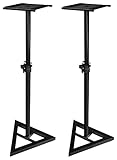
Ultimate Support JS-MS70 JamStands Series Studio Monitor Stands (Pair)

Studio Solutions High Density Studio Monitor Isolation Pads Pair For 5 Inch Monitors
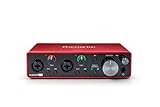
Focusrite Scarlett 2i2 (3rd Gen) USB Audio Interface with Pro Tools | First
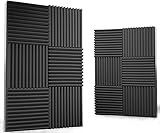
Acoustic Panels 12 pack Acoustic Foam Panels Soundproof Studio foam Sound Dampening noise Sound Deadening foam Sound Panels wedges Sound Proof Sound Insulation Absorbing (Black)

Focusrite Scarlett Solo (3rd Gen) USB Audio Interface with Pro Tools | First

Yamaha HS8S Powered Studio Subwoofer 8" + (3) XLR to XLR Cables

Focusrite Scarlett 4i4 (3rd Gen) USB Audio Interface with Pro Tools | First
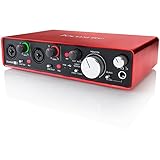
Focusrite Scarlett 2i4 (2nd Gen) USB Audio Interface with Pro Tools | First

On-Stage WS7500 Series Wood Studio Workstation, Black